

What Does a Travel Consultant for Points and Miles Actually Do?
Disclosure: This post may contain affiliate links, which earn me a small commission from bookings at no extra cost to you. Thank you for reading and supporting my blog!
The travel agent model is built on commissions. That’s not a criticism — it’s just how the business works. When a travel agent books your resort, the resort pays them a percentage. When they book your cruise, the cruise line pays them. Which means the person giving you advice on where to stay has a financial relationship with the places they’re recommending.
A travel consultant for points and miles works the other way around. You pay a flat fee. The job is to take the points you already have and build the best possible trip from them — which means the incentive is entirely on your side of the table. No commissions, no markups, no reason to steer you toward anything except the best redemption for your specific situation.
That’s the core difference. Everything else follows from it.

What Most People Think This Service Is (And What It Actually Is)
If you search for “points and miles consulting,” most of what you find are services focused almost entirely on premium cabin flights — business class to Tokyo, first class to Europe, lie-flat beds and champagne before takeoff. That’s a real and genuinely valuable use of points. But it’s not the only one, and for a lot of travelers it’s not the most relevant one.
What most people actually have is this: a Chase Sapphire card they’ve been putting groceries and gas on for a year or two, maybe a hotel card or an Amex, some Hilton or Marriott points from past stays, and a trip they’ve been thinking about — Hawaii, the Keys, a ski trip, an international destination — with no clear idea of how to connect what they have to what they want.
A travel consultant for points and miles handles exactly that. Not just the flights. The whole trip.
What a Points and Miles Consultant Actually Does
Here’s what the engagement looks like in practice, from first conversation to booked trip:
1. Auditing what you have
Most people don’t have a clear picture of their full points situation. They know they have “some Chase points” but haven’t looked at the balance in six months. They have a hotel card they opened for a welcome bonus but aren’t sure which program it earns in. A consultant starts here — mapping out every program, every balance, and every transfer partner available to you.
2. Matching your points to your trip
This is where it gets specific. Not all points are worth the same for every destination. Chase Ultimate Rewards transfer 1:1 or 3:4 to Hyatt — making them exceptionally valuable for hotel stays in places like Hawaii or the Florida Keys, where Hyatt properties run $700+ a night in peak season but cost a flat award rate in points. Amex Membership Rewards transfer 1:2 to Hilton — useful for Hilton’s enormous global footprint, especially when combined with the fifth-night-free benefit on award stays. Knowing which currency to use for which part of which trip is the core skill.
3. Finding actual award availability
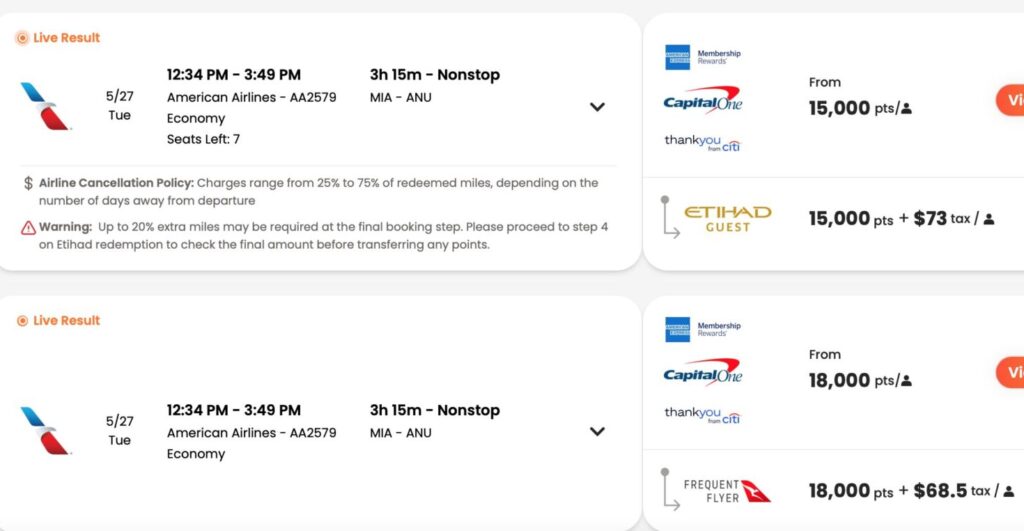
This is the step most people give up on. Award space — the seats and hotel nights that can actually be booked with points — is limited and released on different timelines by different programs. Some release space 11 months out. Others open last-minute. Some partner airline bookings show availability on one search tool and not another. A consultant knows where to look, when to look, and how to find space that isn’t obvious from a standard search.
4. Navigating the transfer rules
Points transfers are often irreversible. If you transfer 80,000 Chase points to United and then discover the award you wanted isn’t available, those points are gone from Chase and sitting in a United account you may not use for months. A consultant confirms availability before any transfer happens — which is a protection most people don’t realize they need until they’ve made an expensive mistake.
5. Executing the booking
Finding the right itinerary is one thing. Actually booking it — selecting the right seats, handling the transfer timing, booking the hotel at the right rate category — requires knowing the quirks of each individual program. At Hilton, booking a “Premium Room Reward” instead of a “Standard Room Award” can double the points cost for the same room.
What This Is Not
A points and miles consultant is not a financial advisor. They’re not telling you which cards to open or giving you credit advice — that’s a regulated activity and a different conversation entirely. They work with what you already have.
They’re also not a general travel agent. They’re not booking package tours, cruises, or all-inclusive resorts through supplier relationships. They’re working the loyalty program side of travel specifically — which is its own ecosystem with its own rules, its own sweet spots, and its own constantly-shifting landscape.
Who Actually Needs This
You probably need a points travel consultant if:
- You have points in multiple programs and aren’t sure which to use for an upcoming trip
- You’ve tried to find award availability yourself and hit a wall
- You’ve transferred points to a program and then couldn’t find anything to book with them
- You have a specific trip in mind — a destination, rough dates, an idea of what you want — and want it executed without spending 15 hours on research
- You’ve been collecting points for a year or more and still haven’t taken a trip on them
You probably don’t need one if you have a single airline’s miles and a single destination in mind with flexible dates — that’s bookable on your own. The value of a consultant scales with the complexity of the situation: multiple programs, specific destinations, peak travel dates, or a trip type (luxury hotel, specific routing, points-heavy destination) where the difference between a good redemption and a great one is significant.

What Good Value Actually Looks Like
The easiest way to evaluate whether a points travel consultant is worth the fee is to do the math on what you’d leave on the table without them.
A four-night stay at a Hyatt in the Florida Keys runs $700–$900 a night in cash during peak season. On points, the same room costs a flat award rate — and the $50–$60 nightly resort fee is waived entirely on Hyatt award stays. The difference between knowing that and not knowing it is several hundred dollars on a single trip. Check out the full breakdown of how Hyatt, Hilton, and Marriott compare in the Keys.
In Hawaii, flights from the mainland via the Turkish Airlines sweet spot can come in at 10,000–15,000 miles each way per person — a fraction of what most people assume Hawaii flights cost in miles. Most people searching for Hawaii award flights look at United or Delta and give up when they see the point requirements. How to Fly to Hawaii on Points from the Mainland covers this in detail.
For ski trips, peak-season hotel rates at Park City or Vail properties under Marriott and Hilton are among the highest in the country for a few months each year — and they’re fully bookable on points at the same flat rate year-round. 24 Best Luxury Ski Resorts on Points has the full program breakdown.
The point isn’t that these trips are impossible to figure out yourself. It’s that the gap between a well-executed redemption and a poorly executed one is real money — and the research required to close that gap is not trivial.
What to Look for When Hiring One
A few things worth checking before you hand your points situation to someone:
Fee structure transparency. A good consultant is clear about their fee upfront and separates it cleanly from the taxes and fees charged by the airlines and hotels. If someone is vague about how they’re compensated, that’s worth pressing on.
They confirm availability before you transfer. This is non-negotiable. Points transfers are often irreversible. Any consultant worth hiring confirms that the award space actually exists before asking you to move points anywhere.
They work with your goals, not a standard package. The question should be “where do you want to go and what do you have?” — not “here’s what we can book with Amex.” Your points, your trip.
They know hotels as well as flights. A lot of points consultants are flight-focused — premium cabins, routing strategies, airline partner charts. That’s valuable, but it’s half the picture. A full-vacation approach means the hotel redemption gets the same attention as the flight.
What This Looks Like With Where’s Natalie Now
Full Vacation Planning is built around exactly this: taking the points you already have — across whatever mix of programs — and building a trip from them. That includes flights, hotels, and the specific destination knowledge that comes from actually traveling to these places and writing about them.
The Florida Keys, Hawaii, ski destinations, Mexico — these aren’t abstract examples. They’re destinations with real posts, real redemption breakdowns, and a local’s perspective on which properties are worth the points and which aren’t. That context doesn’t show up in a standard award search tool. It comes from having been there.
If you want to know whether your specific points situation works for a trip you have in mind, reach out here — the first conversation is always free.
What to Read Next
If you’re still comparing your options — weighing a traditional travel agent against a points specialist — Travel Planner vs. Travel Agent: What’s the Difference? walks through all three categories side by side.
If you want to see the math on whether your points balance is actually enough for a full trip, Can You Book a Whole Vacation With Points? gives you realistic numbers across three destination types.